


Published
4 December 2025
Author
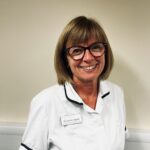 Suzanne Spink
Suzanne Spink, a specialist SLT in neurosurgery and oncology at Leeds Teaching Hospitals, reflects on the past, present and future of speech and language therapy in awake craniotomy. From early practice to evolving methods and research, she shares her perspective on what lies ahead for the profession.
When people hear the phrase awake brain surgery, they usually imagine the dramatic moment in the theatre, a patient talking while surgeons operate. For me, the real work begins long before that. The foundations are built in quiet clinic rooms, at the point of diagnosis. This is when patients are frightened, uncertain and trying to understand what lies ahead. That’s where my role as an SLT in the awake craniotomy process begins. I often describe the SLT role as the scaffolding that supports the process.
A role shaped over decades
I qualified in 1992 and have spent the past 30 years working in neurosurgical settings across two major centres. Then I became a clinical lead for speech and language therapy in 2004 supporting neurosurgical patients in Leeds. At that time, awake craniotomy was still a relatively new and emerging procedure. Only a handful of SLTs across the country were involved.
Those early days were collaborative and exploratory. We were figuring things out as a team; developing assessment tools, refining our approaches alongside neuropsychologists, linguists and neurosurgeons whilst adapting from each case. The field continues to grow because we learned together.
Today, I’m part of the European Low Grade Glioma Network, a research group examining the treatment of Low Grade Glioma’s language assessment in awake brain surgery. There is an annual meeting where colleagues from across Europe including SLTs, neuropsychologists and neurosurgeons, align methods and share developing evidence. Being part of these discussions has helped shape how our profession understands and defines this specialist role.
Lessons for the wider profession
Although awake craniotomy might sound far removed from many everyday clinical settings, I believe it holds lessons for the wider SLT community. You witness neuroplasticity in real time. You see how language reorganises, how networks recover and how resilient the brain can be. That perspective feeds directly into rehabilitation. The expectation for our awake craniotomy patients is always recovery of language function to preoperative baseline.
My advice to students and newly qualified SLTs, is to let your curiosity guide you. In Leeds, we also take students into theatre to observe. Watching language mapped in front of you deepens your understanding for how communication is structured in the brain. For newly qualified SLTs, it can be transformative.
Human presence in a technological age
There is growing interest internationally in using digital brain mapping tools. While AI can analyse patterns and collect data, it can’t replace human judgment, empathy and advocacy. My role in theatre is responsive and relational. It isn’t algorithmic.
For me, supporting a patient through awake brain surgery is a privilege. You walk with them from that first preoperative meeting to recovery, offering support in a space that can feel anything but steady.
Awake craniotomy at its core, showcases what SLTs bring to healthcare: precision, communication and human connection.
Looking ahead
As the RCSLT’s new guidance reinforces, SLTs are not simply observers in the operating theatre. They are essential partners, ensuring that when surgeons save language, they also preserve the person who speaks it.

Find out more
Explore RCSLT’s latest clinical guidance on awake craniotomy, co-produced by people with lived experience. It outlines the SLT’s role throughout the procedure and includes evidence-based resources and clinical recommendations.
Look out for more in the Bulletin winter issue, where Suzanne shares her thoughts on RCSLT’s new awake craniotomy guidance. She’ll offer a glimpse into what surgery is really like inside the operating theatre through the lens of an SLT, including the moment-to-moment demands of intraoperative language assessment.
Share this article:


