


Published
28 October 2026
Author
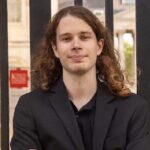 Thomas Deakin
, a second-year English with Film Studies undergraduate at King’s College London, shares his awake craniotomy journey.
On 14 April 2026, I fainted in central London. After I had realised what had happened, I could not understand the simple English words in front of me.
Tests at the Royal London Hospital in Whitechapel revealed that I had a potential brain tumour that needed to be removed. Located in Wernicke’s area of the brain, the tumour was causing my brief loss of language was caused by the tumour targeting my capacity for speech and language, which led me to engage thoroughly with SLTs both before and after my operation.
For the next month, I attended approximately 20 appointments, many of which were with SLTs, to examine my brain before the surgery, whilst balancing this with revising for the final exams of my first year of university. These appointments involved testing my IQ and my mental acuity in numerous areas to determine where my brain was being negatively affected and how it had altered my linguistic expression. Tests eventually revealed that, whilst my mental power was mostly intact, the potential tumour needed to be removed immediately because of the risk of it growing could incapacitate my ability to speak and read by causing either another seizure or, more severely, a stroke.
On 20 May 2026, during the surgery, SLTs aided me through an awake craniotomy by frequently asking me IQ-related questions or asking me to talk about my interests to ensure that my brain wasn’t being damaged by the tumour. To my relief, the tumour was removed successfully during this surgery, and I was later informed it was a cavernoma that was approximately the size of a tomato. Although this meant it couldn’t have spread, it could have caused a stroke if it kept growing by initiating a debilitating bleed outside of my brain. Working with SLTs in the days following the surgery, my linguistic abilities returned to normal, and I recovered from the surgery after a difficult two-week rest period.
Despite there being inevitable consequences from the surgery that have irrevocably changed my life such as having to take seizure medication and no longer drinking alcohol, I still managed to achieve a 2:1 in my first year studying English with Film Studies at Kings’ College London. Furthermore, I have still managed to have a fantastic summer, going to Italy with my friends, and will be spending half of the next year in Vancouver as part of an exchange programme. Therefore, although the experience of brain surgery was arduous and painful, the dedicated help of the Royal London Hospital and SLTs has emboldened me to flourish and be optimistic for the future ahead.

Find out more
Explore RCSLT’s latest clinical guidance on awake craniotomy, co-produced by people with lived experience. It outlines the SLT’s role throughout the procedure and includes evidence-based resources and clinical recommendations.
Have you read our previous SLT Voices blog on awake craniotomy and the SLT voice across time? Suzanne Spink, a specialist SLT in neurosurgery and oncology at Leeds Teaching Hospitals, reflects on the past, present and future of speech and language therapy in awake craniotomy. From early practice to evolving methods and research, she shares her perspective on what lies ahead for the profession.
